
You’ve been there: You start to create content and suddenly… nothing.
You have a deadline. You have a platform. But you’ve got zero words on the page.
That used to be the scourge of a content creator. And now, AI has come in and thrown everything up in the air. These 4 easy AI content boosts aren’t just life hacks — they’re shortcuts to a leaner, meaner and more consistent content game overall.
Whether you are a blogger, a small business owner or anyone in between, these boosts were made for you. No tech background needed. No complicated setup. Only practical wins you can start using today.
Let’s break them all down.
Boost #1 — Get More Writing Done in Less Time With the AI Writing Assistant
So let’s start with the largest one first.
Writing takes time. A lot of it. Research, outlining, drafting, editing — it’s a full process. And for most of us, it’s the part that introduces a drag on everything else.
AI writing assistants such as ChatGPT, Jasper and Writesonic are increasingly being used by creators who want to create more without burning themselves out.
Here’s the thing — they don’t write for you. They write with you. You have the concept and direction. The AI fills in the structure, the words and the flow. Then you polish it to your voice.
Why So Many Creators Are Switching to AI Writing Tools
The numbers tell the tale in no uncertain terms.
| Content Task | Average Manual Time | With AI Assistance |
|---|---|---|
| Blog post (1,000 words) | 3–4 hours | 45–60 minutes |
| Social media caption | 20–30 minutes | 2–3 minutes |
| Product description | 30–45 minutes | 5 minutes |
| Email newsletter | 2–3 hours | 20–30 minutes |
| Video script (5 min) | 1.5–2 hours | 15–20 minutes |
These aren’t made-up numbers. Creators in other fields are seeing the same kinds of results. And the time savings are real — and they add up quick.
How to Get the Most Out of AI Writing Tools
Here is a simple formula that works:
Be specific. Instead of “write a blog post about fitness,” try: “write a 1,000-word blog post for beginners on 5 morning workout habits that improve mental health.”
Set the tone. Explain to the AI who you’re writing for and how you want it to sound — casual, professional, humorous, inspiring.
Give context. The better the input, the better the output. Tell it about your niche, audience and what you’d like readers to do.
Always edit. This is the golden rule. AI gives you a strong draft. You give it the final shape. Stories you live, real life examples and your unique voice are what connect content with people.
Underlying these 4 easy AI content boosts is one fundamental principle: let the AI do the heavy lifting while you get to infuse it with heart.
Boost #2 — Get More From What You’ve Already Got
Having to come up with content from scratch day in and out is tiring. Most creators stall not because they have run out of things to say, but because they have run out of energy.
The solution? Stop reinventing the wheel and start repurposing what you’ve already created.
Of the 4 easy AI content boosts, this is one of the most potent — because the content is already there. All you need is AI to help you reshape it.
One Piece of Content, Many Different Forms
Here’s how this looks in practice. You make one powerful piece of content — a 10-minute YouTube video, say. AI tools can turn that into:
A full blog post — Tools like Descript or ChatGPT will transcribe the video and rewrite it as a long-form article.
An email newsletter — Pull the top insights and reformat for your email list.
A Twitter/X thread — Boil the takeaways down into a punchy, scrollable thread.
Instagram carousels — Create a slide for each key point.
Short-form video clips — Snag the most exciting 60-second moments using Opus Clip or CapCut AI.
A LinkedIn post — Repurpose the content with a professional angle.
Pinterest pins — Turn key takeaways into visuals with Canva AI.
That’s 7 pieces of content from 1 original. And because AI does most of the reformatting, you can do this in a few hours instead of a few days.
A Repurposing Plan That Works for the Long Term
Here’s a simple way to make repurposing part of your weekly routine:
Day 1 — Create your main piece of content (video, podcast or long blog post).
Day 2 — Repurpose with the help of AI tools. Transcribe, summarize, reformat.
Day 3 — Schedule your repurposed content across platforms with a service such as Buffer or Later.
Day 4 & 5 — Engage and track what works.
Weekend — Plan your next main piece based on the response that garnered the best results.
This whole system keeps you consistent without sucking the life out of your creative energy. And consistency is the actual secret to growing any sort of audience online.
Boost #3 — Step Up Your Visuals With AI Design Tools

Here is something we don’t talk about enough.
Your content might be the most well-composed stuff on the web. But if it looks dull, no one will click on it, read it or share it.
Visuals matter enormously. For many years, great visuals either cost money (hiring a designer) or required skills (learning Photoshop or Illustrator). Most small creators had neither.
AI design tools have transformed that entirely. This boost is perhaps one of the most visually noticeable of the 4 easy AI content boosts since it changes how your content looks — immediately.
Some AI Design Tools You Should Know About
| Tool | Best For | Skill Level Needed |
|---|---|---|
| Canva AI | Social graphics, thumbnails, presentations | Beginner |
| Adobe Firefly | Professional-grade AI image generation | Beginner–Intermediate |
| MidJourney | Highly creative, artistic visuals | Intermediate |
| DALL·E 3 (in ChatGPT) | Quick custom images from text prompts | Beginner |
| Looka | Brand logos and identity kits | Beginner |
| Remove.bg | Background removal in seconds | Beginner |
You don’t need to be good at all of these. Choose one or two that appeal to your needs and learn them well.
What AI Visuals Can Do for Your Content
Thumbnails — High-contrast YouTube thumbnails with large, bold text can double or triple your click-through rate. With Canva AI, you can generate options in minutes.
Blog header images — Rather than a standard stock image, you can create an entirely unique image that perfectly complements your writing.
Social media posts — Consistent, branded visuals build recognition. AI tools help you maintain that consistency without spending hours creating individual posts.
Infographics — Illustrate complex data or step-by-step processes as visual graphics that are easy to share and understand.
Ad creatives — If you’re running paid ads, AI tools can produce numerous creative variations to test without enlisting a design team.
A Basic Design Strategy for Non-Designers
Choose a color scheme (3–4 colors to represent your brand). Pick 1–2 fonts. Consistently use them throughout your visuals. Have AI generate the layout and imagery. You just tweak and publish.
That’s it. You don’t have to be a designer. You need a consistent style and an AI tool to execute it.
Boost #4 — Get Found Online Quicker With AI-Powered SEO
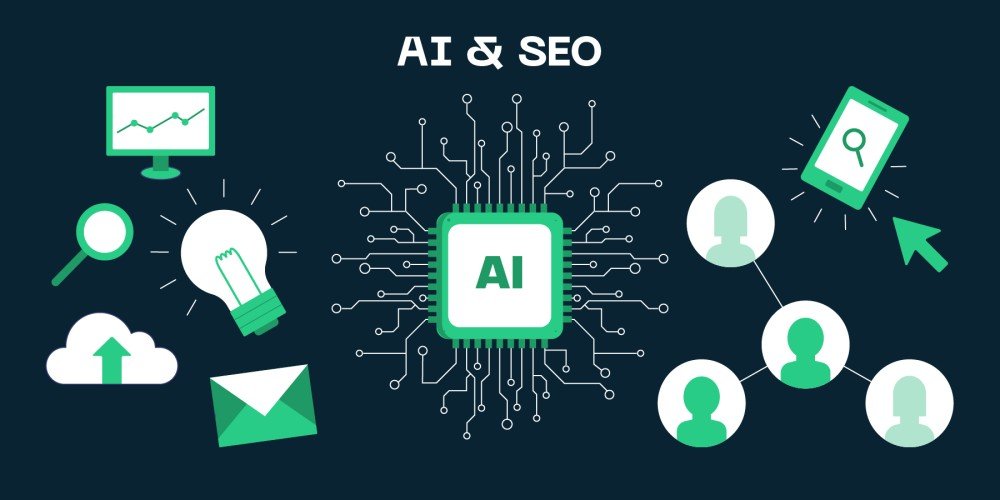
You might write the most amazing content in the world. But no one would find it if it wasn’t optimized.
Search Engine Optimization — SEO — is how you attract people to your content on Google and other search engines. In the past, it was complicated, too technical and took a while. AI has made it much easier.
This is the 4th and perhaps most strategic of the 4 easy AI content boosts. Because being discovered consistently is what transforms a hobby into a business.
What AI SEO Tools Actually Do
AI SEO tools analyze what’s already ranking on search engines and tell you exactly what you need to do to compete. Here’s a breakdown of what they look at:
Keyword research — They discover the precise words and phrases used by people in your niche when searching.
Content gaps — They tell you what topics your competitors have covered that you haven’t.
Readability analysis — They let you know if your content is too difficult for your target audience.
Word count benchmarks — They help you figure out how long an article needs to be to compete with the top results.
Semantic keywords — These are related words and phrases that help search engines fully understand what your content is about.
Internal linking suggestions — They tell you which of your existing pages you should be linking to.
Top AI SEO Tools to Try Right Now
| Tool | What It Does Best | Starting Price |
|---|---|---|
| Surfer SEO | Content optimization and scoring | ~$89/month |
| Clearscope | Keyword and semantic analysis | ~$170/month |
| Frase | AI content briefs and outlines | ~$15/month |
| SEMrush AI | Full SEO suite with AI features | ~$129/month |
| RankIQ | Designed specifically for bloggers | ~$49/month |
| Ahrefs AI | Competitive analysis and keywords | ~$99/month |
Budget-friendly option: Start with Frase. It’s reasonably priced, great for beginners and provides solid content briefs to follow.
How to Use AI for SEO Without Losing Your Mind
Here’s a simple, no-stress approach:
Step 1 — Choose your topic and enter it into an AI SEO tool such as Frase or Surfer SEO.
Step 2 — Look at the proposed outline. See the suggested headings, keywords and word count.
Step 3 — Write your content using the structure as a guide. Use an AI writing assistant like ChatGPT to speed up the drafting.
Step 4 — Plug your draft into the SEO tool. It will score you and offer ways to improve.
Step 5 — Make the suggested adjustments. Publish. Then track your rankings over the next couple of weeks.
This approach brings together two of the 4 easy AI content boosts — writing and SEO — into one powerful workflow. That’s how smart content creators are continuing to land on page one of Google without a big, expensive agency behind them. For more content strategy insights and media tips, check out Media Progresif — a great resource for creators looking to grow smarter.
Putting All 4 Boosts Together — A Full Content System
Now this is where it gets really exciting.
Each of these boosts stands up well on its own. But integrate all 4 easy AI content boosts into a single system and the results are in a completely different league.
Here’s what a complete weekly content system looks like using all four boosts:
Monday — Research and Plan Use an AI SEO tool to research a high-value keyword. Build your content outline based on the AI brief.
Tuesday — Write Use ChatGPT or Jasper to write your primary piece of content. Edit it to match your voice. Add your own anecdotes and examples.
Wednesday — Design Use Canva AI or Adobe Firefly to create your thumbnail, social graphics and any infographics for the article.
Thursday — Repurpose Use AI to transform your existing content into captions, email newsletters, short-form video clips and social posts.
Friday — Publish and Schedule Go live with your main content. Schedule all repurposed pieces across your platforms.
Weekend — Analyze Check your analytics. See what performed. Use those insights to plan next week’s content even smarter.
That’s a full, sustainable content operation — powered by 4 easy AI content boosts — that most people could run in just a couple of hours a day.
The Real Deal With AI and Content Creation
Let’s be real for a second.
AI is not magic. It won’t do everything for you. And it certainly won’t replace the thing that makes your content unique — which is you.
What AI does is eliminate the friction. It solves the blank page problem. It removes hours of tedious formatting and resizing. It takes out the guesswork around keywords and structure.
That leaves you with more time and energy to do the things AI can’t do:
- Share your real experiences
- Tell stories that only you can tell
- Establish real relationships with your audience
- Cultivate a creative voice that people identify with and trust
The creators who are currently winning are those who leverage AI as a tool — not a substitute for their creativity. They never cede the driver’s seat. AI just handles the engine.
According to HubSpot’s 2024 State of Marketing Report, creators who consistently use AI tools in their workflow report significantly higher content output and engagement rates — making now the best time to start.
Mistakes to Avoid With These AI Content Boosts
The best tools can be misused too. Here are some common pitfalls to avoid:
Skipping the editing step. AI output is a starting point, not a final product. Always read through, rephrase awkward sentences and inject your own voice.
Using AI for facts without cross-checking. AI can confidently state wrong things. Verify all statistics, dates and specific claims before you publish.
Copying competitor content through AI. Just asking AI to rewrite someone else’s article doesn’t create value. Use AI to build something original.
Ignoring your audience’s feedback. AI can optimize for search engines, but your real readers will show you what they actually love. Notice the comments, shares and questions.
Overloading on tools. You don’t need 10 AI tools. Start with two or three that address writing, design and SEO. Master those before adding more.
FAQs — 4 Easy AI Content Boosts
Q: Do I need to be technically proficient to use AI content tools? Not at all. The vast majority of AI content tools are made for everyday users, not programmers. If you can type a sentence and click a button, you can use these tools. ChatGPT, Canva AI and Frase all have very beginner-friendly interfaces.
Q: Are these AI tools free to use? Many offer free plans or free trials. ChatGPT has a free version. Canva AI has a free tier. Frase offers affordable entry plans. You can get started with these 4 easy AI content boosts without spending anything upfront.
Q: Will Google penalize my content if I write it using AI? What it comes down to is Google looking for helpful, high-quality content — not how that content was made. AI-assisted content that is well-edited, accurate and actually useful does well in search. The bottom line: always add value and keep the editing tight.
Q: How quickly does AI-powered SEO produce results? SEO is a long game no matter what tools you use. Most creators begin to notice movement in search rankings within 3–6 months of producing consistent, optimized content. AI tools speed up the content creation process massively — it’s just that search engines operate on their own timeline.
Q: Can these boosts be applied to any kind of content — not just blogging? Absolutely. These 4 easy AI content boosts work for bloggers, podcasters, YouTubers, social media managers, e-commerce sellers, coaches and other digital creators. The tools are flexible enough to adapt to almost any content format or platform.
Q: If I’m entirely new, what’s the best place to start? Begin with Boost #1 — AI writing assistance. Sign up for a free ChatGPT account and draft something you’ve been putting off. Once you see how quickly it works, you’ll naturally want to check out the other three boosts.
Wrapping It All Up
Creating content doesn’t always have to be an uphill battle.
The 4 easy AI content boosts discussed in this article — smarter writing, smart repurposing, better visuals and AI-powered SEO — are leveling the playing field for creators of all kinds.
You don’t need a huge team. You don’t need the biggest budget. And you don’t need years of technical expertise.
You just need to start. Pick one boost. Try it this week. See the difference it makes. Then layer in the next one.
Soon you’ll have a content system that hums along, looks polished and actually gets found by the people you want to reach.
The creators using these tools today are the ones who will be ahead of the curve tomorrow. The only question now is — which boost are you going to start with?