

The vast majority are working harder than they should be.
They’re mired in the same routine day in, day out. Copy-pasting. Reformatting. Answering the same emails. Searching for files. Writing reports from scratch.
It doesn’t need to be like this.
AI workflow tips are useful not only for tech experts or large corporations. They are for anyone looking to take back their time and enjoy their workday.
Whether you’re a freelancer or student, small business owner or corporate team member — these 8 simple tips for AI workflow and productivity will help you work smarter, move faster, and stress less.
Let’s dive in.
What Even Is an AI Workflow, Anyway?
Before we let the tips fly, a quick note of clarification.
Anything you do is a workflow, meaning it’s just the process by which you accomplish an objective. Writing a report, fielding emails, posting to social media — those are all workflows.
An AI workflow is the same thing, except with tools based in artificial intelligence doing some (or much) of the heavy lifting for you.
Think of it as having a very fast, hyperintelligent assistant who never sleeps, never complains and can accomplish tasks in seconds.
It’s not about substituting your thought. It’s to strip away all the boring grindy nonsense and let you focus on what actually matters.
Here is what AI workflows actually look like in action:
| Task | Without AI | With AI |
|---|---|---|
| Writing emails | You write everything yourself | You write the idea and AI writes for you |
| Summarizing documents | Manually summarizing | AI reads and summarizes in seconds |
| Finding data | Searching across various tabs | AI pulls everything into one place |
| Scheduling meetings | Doing it manually on your own | AI finds the best time instantly |
| Creating content | Starting with blank pages | You get a first draft right away |
| Follow-ups | Forgetting follow-ups | AI reminds you and even follows up for you |
See the difference? Now, let’s see exactly how you can incorporate these habits into your daily routine.
Tip #1 — Begin Every Morning With an AI Daily Briefing

End The Chaos, Start Your Day With Focus
Most people start their day by opening 10 new tabs, flicking through emails, reading Slack messages, browsing news websites and yet somehow still don’t know what they’re actually supposed to concentrate on.
That haphazard start, however, kills productivity before your day has even started.
Instead, try this: Harness AI to make you a personalized morning briefing.
How to Set It Up
Tools like ChatGPT, Claude or Notion AI can help corral your priorities, digest all of the overnight messages and present you with three ways to get started — all at once.
You input a task list or plug in your tools, and then you ask the AI something like:
“What should I do first today in my time available after x, y and z? List out in plain English what my most important items are.”
The AI has given shape to your chaos in a way you can understand. In under two minutes.
Why This Tip Works
Having a clear focus helps to minimize decision fatigue. You’re not expending mental energy on what happens next. That thinking has already been done for you by the AI.
Research reveals that compared with leaving things to chance or tackling them off the cuff, planning ahead in the morning can increase an individual’s productivity by more than 25%. Add AI to that habit and the gains multiply quickly.
Top tools for this: ChatGPT, Claude, Notion AI, Motion
Tip #2 — Use AI to Draft Your Stuff (Forever)
The Problem of the Blank Page is Gone
Nothing destroys momentum like a blank page.
An email, a report, a social media post or even a proposal — writing from scratch is tiring. And it’s not your job anymore.
AI can write the first draft. Every single time.
How to Do It Right
Don’t just tell AI: “write email.” Give it context. The more detailed your actual prompt, the better the result.
Instead of: “Write an email to a client.”
Try: “Write a professional but friendly follow-up email to a client who has not responded in a week. The project is the redesign of a website. Keep it short and complete with a strong call to action.”
That is the kind of prompt that AI needs to know in order to produce something actually usable.
The Edit, Don’t Write Rule
The way to think about AI is as your rough draft machine. Your task is to refine, revise, and sprinkle in your personality. That’s it.
This alone can reduce your writing time by 60-70%.
Here’s the breakdown on various content types:
| Content Type | Without AI | With AI First Draft |
|---|---|---|
| Short email (150 words) | 10–15 minutes | 2–3 minutes |
| Blog post (1000 words) | 3–5 hours | 45–60 minutes |
| Social media caption | 15–20 minutes | 2-5 minutes |
| Project proposal | 4–6 hours | 1–2 hours |
| Meeting summary | 30–45 mins | 5 mins |
Best tools for this: Jasper AI, ChatGPT, Claude, Copy.ai
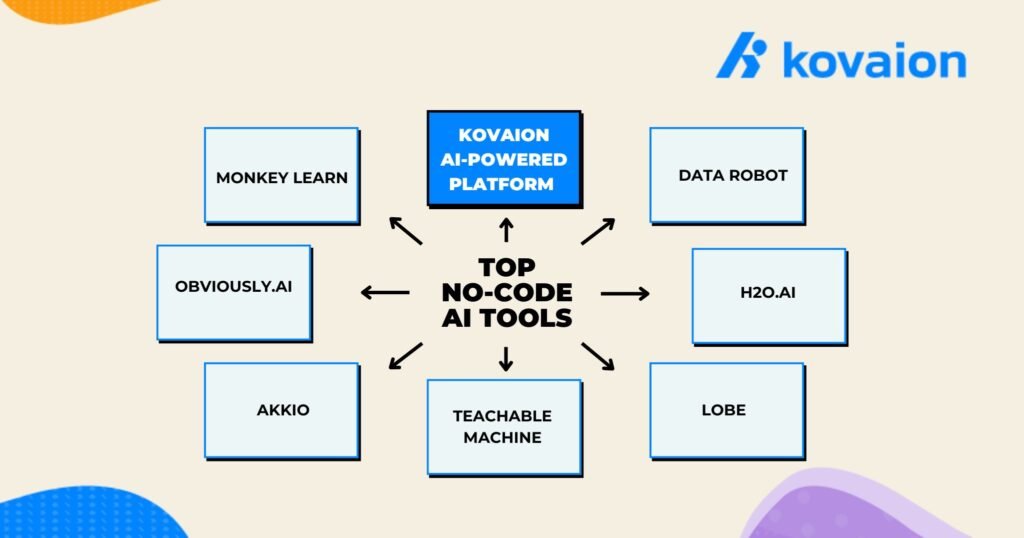
Tip #3 – Automate the Mundane Using No-Code AI Tools
Great Work Hates Repetition
Every time you perform a task manually — moving a file, sending off an alert, updating a spreadsheet — it’s brainpower wasted that could otherwise be used for creative and strategic thinking.
The fix? Automate it.
And you don’t have to know how to code to do it.
Meet the No-Code Automation Tools
Apps like Zapier, Make (formerly Integromat) and n8n enable you to automate workflows between your apps — on AI steroids — all without a single line of code.
The following are several example automations you can create in minutes:
- New lead fills in your form → AI writes a personalized welcome email → Email gets sent on autopilot
- You get something emailed over → AI extracts the important bits → They go into your spreadsheet
- You write a blog → AI turns it into social media versions → They get scheduled out to these platforms
- Customer leaves a review → AI writes a response → One-click approval!
These aren’t futuristic ideas. They happen every day, in companies of all sizes.
The Time Savings Add Up Fast
Suppose each repetitive task takes 5 minutes. You do 10 of them a day. That is 50 minutes a day — more than four hours a week — just on tasks that AI could do.
That’s half a workday. Every week. Given back to you.
Best tools for this: Zapier, Make, n8n, Bardeen
Tip #4 — Have AI Summarize Everything That’s Too Long to Read
The Information Overload Is Real
Long reports. Lengthy emails. 60-minute meeting recordings. Research papers. PDFs that go on for 40 pages.
There is too much to read and too little time in which to read it.
AI solves this completely.
How AI Summarization Works
Tools like ChatGPT, Claude and Notion AI can read long documents and summarize the key points for you in seconds. You paste in the text (or upload a file), ask for a summary and you’re done.
You can even get specific. Try prompts like:
- “Provide 5 takeaways from this story.”
- “What are the top three critical decisions described in this email chain?”
- “What are the main points from this meeting transcript?”
Real-World Example
Imagine you’re in a business that receives 20-page performance reports every week. It takes 3–4 hours to read them all.
With AI? You submit each one and request a one-paragraph summary. Total time: 10 minutes.
You are informed without all the information weighing you down.
It is one of the most underrated AI workflow tips that saves you hours every single week without too much disruption to how you normally operate.
Best tools for this: Claude, ChatGPT, Notion AI, Otter.ai (for meeting transcripts)
Tip #5 — Create An AI-Driven Research System
It’s Ridiculous How Long Research Takes the Old Way
Whether you’re prepping for a client pitch, writing an article, researching a topic, or comparing competitors — research is time-consuming.
You open 15 tabs. You skim. You lose track of sources. An hour later, you forget what you read.
AI gives you a smarter way.
The New Way to Research with AI
Instead of sifting through Google and trying to put everything together manually, use AI to:
- Get a quick, easy-to-understand summary of any topic
- Ask follow-up questions as if you’re addressing an expert
- Compare options side by side
- Extract specific information from large documents
- Generate structured report summaries to share with others
This is exactly what tools like Perplexity AI are for. It scours the internet in real time, and provides referenced answers — no tab chaos necessary.
How to Set Up Your AI Research Pipeline
Here’s a simple way to do that:
Step 1 — Ask AI to give you a broad overview of the subject
Step 2 — Ask for the top three to five key points or trends
Step 3 — Drill down into specific areas via a series of questions if needed
Step 4 — Use AI to collate all of that information into a structured write-up
Step 5 — Use that summary as your starting point for whatever it is that you’re working on
This turns what normally took 8–12 hours of research into 2–3 hours.
Best tools for this: Perplexity AI, ChatGPT with browsing, Claude, Elicit (for academic research)
Tip #6 – Use AI to Handle and Respond to Emails Faster
Email Is Eating Your Day
On average, professionals spend 28% of their workday managing emails. That’s more than two hours every day — just reading and writing messages.
That’s not a small problem. That’s a huge drain on your most precious resource: your time.
How AI Transforms Email Management
Modern AI tools can now:
- Read your emails and suggest responses
- Compose responses in your own tone and voice
- Summarize email threads in seconds
- Flag the most important messages
- Automatically sort and classify your inbox
AI can help make email feel manageable again, and tools like Gmail’s built-in AI, Microsoft Copilot for Outlook and stand-alone apps such as Superhuman use it to do that.
A Simple AI Email Workflow
Here’s a daily routine that uses AI to help reduce the time you spend in your inbox by half:
Morning (10 minutes): Have AI summarize overnight emails. Read summaries, not every email.
During the day: Let AI draft your email responses. Edit for tone, then hit send.
End of day (5 minutes): Have AI flag what still needs attention.
That’s it. No more inbox anxiety. No more 45-minute email sessions.
Prompt Example for Email Replies
Try this using ChatGPT or Claude:
“Here’s an email I received. Reply to confirm the meeting, request the agenda in advance and keep it under 100 words.”
And 10 seconds after that, you’ll have a polished reply.
Best tools for this: Gmail AI (Gemini), Microsoft Copilot, Superhuman, SaneBox
Tip #7: Build Your Own Personal AI Knowledge Base
Putting An End to Lost Ideas and Critical Information
Ever had a brilliant idea that you forgot an hour later? Ever spent 20 minutes searching for a document you were sure you’d saved?
You likely keep your knowledge in your brain, or scrawled on bits of paper or tucked away in folders no one can find. It is a system that continues to fail.
Add an AI-powered knowledge base, and the problem is permanently solved.
What Is an AI Knowledge Base?
It’s a central location where you save everything — notes, documents, research material, thoughts and meeting notes — and then use AI to search for it in real time.
You no longer hunt for documents; you ask questions.
- “Find the client proposal from March.”
- “What did we say about the pricing strategy last month?”
- “Summarize my notes on the Johnson project.”
The AI finds it, summarizes it and delivers it instantly.
Tools That Make This Possible
For this, Notion AI is one of the best. You create your workspace in Notion, and the AI layer makes it all searchable and interactive.
Mem.ai is another great choice — it uses artificial intelligence to help organize your notes so you don’t have to do much of anything manually.
Why This Matters for AI Workflows
The more you use your AI knowledge base, the more powerful it becomes. It’s like constructing a second brain that remembers everything.
You no longer lose good ideas over time. You stop repeating work. You stop wasting time searching. Everything you have ever learned or created is only one question away.
For more insights on building progressive AI-powered workflows and digital transformation strategies, explore resources that can help you implement these systems effectively in your organization.
Best tools for this: Notion AI, Mem.ai, Obsidian + AI plugins, Microsoft OneNote with Copilot
Tip #8: Keep Your AI Workflow Sharp (Review and Refine Every Month)
AI Tools Change Fast. Your Workflow Needs to Stay Current.
Here’s the tip most folks miss. And it’s also one of the most important.
AI tools are quickly getting better in a way that’s difficult to keep up with. What wasn’t doable three months ago might be simple now. That tool you loved may have been superseded by something three times as good.
If you build your AI workflow once and never go back to it, you are going to fall behind very quickly.
Run a Monthly AI Workflow Review
Take a few minutes at the end of each month to ask yourself:
- Which tasks am I still performing manually that AI could do instead?
- What AI tools am I actually using, and which ones am I paying for but ignoring?
- Is there a new tool I’ve been hearing about that could make my workflow better?
- What’s the biggest thing taking up my time each week, and can I automate it with AI?
This small habit keeps you sharp and your tools current.
Track Your Time Savings
One powerful motivator is to keep track of how much time AI is saving you each week. Even a rough estimate works.
| Workflow | Time Saved/Week |
|---|---|
| Email management | 1-2 hours |
| Content writing | 2-3 hours |
| Research and summarizing | 1-2 hours |
| Automating repetitive tasks | 2-4 hours |
| Scheduling & planning | 30-60 minutes |
| Total Potential Savings | 7–12 hours per week |
That’s not a small number. Indeed, for lots of folks, integrating these 8 simple AI workflow tips can basically hand them an entire workday every single week.
Bringing It All Together: The AI Workflow Action Plan
There is an easy way to begin, without getting overwhelmed.
Week 1: Choose just one tip from this list. The simplest one for you. Start there.
Week 2: Add a second tip. Get used to two AI habits.
Week 3: Add a third. After the first few weeks, you’re going to see the efficiency gains already.
Week 4: Have your first monthly review. Check out what’s working and what can be improved.
You don’t have to do everything at once. Tiny, little baby steps eventually lead to giant results.
And the best AI workflow is the one you’ll actually stick to. Grow it over time and make it your own.
FAQs About AI Workflow Tips
Q: Is there a requirement for technical skills to develop an AI workflow?
Not at all. Much of today’s AI is built for everyday users. If you know how to use Google Docs or send an email, you can use platforms like ChatGPT, Notion AI or Zapier. No coding required.
Q: What is the time needed for creating an AI workflow?
Some tasks take minutes — using AI to write emails or summarize documents. Others, such as creating an automation with Zapier, may take an hour or two to set up. But once it is launched, it operates on autopilot.
Q: Are AI workflow tools costly?
Lots of the best tools have free plans that are truly useful. ChatGPT, Notion, Canva AI and Zapier have free tiers available. Paid plans are generally in the $10-$50/month range and almost always provide enough value in time saved to justify their cost.
Q: Can sensitive information be entered into AI tools?
It depends on your tool and settings. For sensitive business or personal data, always read the privacy policy of the tool you’re using. Use business or enterprise plans, which generally have better protections for data. Do not paste your sensitive client data into free public AI tools.
Q: What is the one AI workflow tip that works fastest?
Using AI to write first drafts. This is the tip that saves the most time right away, with almost zero learning curve. Start there, and you feel the difference on day one.
Q: Can students apply these AI workflow tips?
Absolutely. AI can help students to summarize textbooks, organize notes, outline essays or research assignments along with the key points associated with a topic and schedule their study time. In an academic environment, all 8 tips work with some minor modifications.
Q: If I use AI, will my work seem less personal or creative?
Only if you let it. View AI as a beginning, not an end. Your edits, your perspective and your voice are what make the work human. AI simply does the grunt work, leaving you with more energy for the creative stuff.
According to Harvard Business Review’s research on AI productivity, professionals who integrate AI tools into their workflows see significant improvements in both efficiency and output quality, with some reporting up to 40% time savings on routine tasks.
The Takeaway: Work Less, Achieve More
Here’s the honest truth.
AI isn’t magic. It is not going to fix everything, or replace all skill. But it will help eliminate the boring, redundant and time-consuming parts of your day — as long as you let it.
These 8 simple AI workflow tips are not complicated theories. They’re simple, actionable habits people are implementing right now to regain hours of time each and every week.
You don’t need a big budget. You don’t need a tech background. You just need to start.
Pick one tip. Try it today. Then build from there.
The way you work in six months might be entirely different than it is today. And that’s a very good thing.