
Remember when marketing was slapping something on a billboard or taking out an ad in the newspaper and crossing your fingers? Those days are long gone. Now, the brands that are winning online are not simply working harder — they’re working smarter, employing artificial intelligence to do things which would have seemed like science fiction a mere five years ago.
AI is no longer the exclusive domain of tech giants. Small businesses, solo creators, or mid-sized brands are wielding it to go toe-to-toe with institutions that may be 10 times their size. The playing field is getting level very quickly, and those who get these tools first are the ones that will be leading.
In this post, I’m going to deconstruct 4 game-changing AI marketing hacks real businesses are using today to get more customers, spend less cash, and develop brands that actually matter. No fluff. No jargon. Just practical, effective strategies you can start mulling today.
Trick #1 — Allow AI to Author the First Draft (And Then Make It Yours)
Content Is Still King — Why Creating It Is Friggin’ Exhausting
Content has always been the traffic generator for most of us as marketers. Blog posts, social captions, email newsletters, product descriptions — you name it. Small teams typically don’t have time to produce all of it at a high level. And that’s where AI content tools come in.
Tools such as ChatGPT, Claude, Jasper, and Copy.ai can write complete blog drafts, social media posts, ad copy, and email sequences in minutes. What a writer could once accomplish in three hours now takes 30 minutes — and the quality, when steered right, is legitimately good.
How to Use AI for Content the Smart Way
Here’s where people go off the rails. They tell AI to write something, then copy-paste it directly onto their website and wonder why it doesn’t work. The trick is not letting AI do everything. The key is treating AI as a co-writer, not a substitute.
Consider it like this: AI writes the skeleton, you add the muscle. You give the tool some input about your audience, brand voice, goal, and key points. The AI drafts it. Then you go in and incorporate real stories, personal history, opinions, and your unique point of view. That combo? That’s what ranks on Google and speaks to real readers.
What AI Content Can Do for Your Brand
| Task | Time Without AI | Time With AI |
|---|---|---|
| 1,000-word blog post | 3–4 hours | 30–45 minutes |
| 10 social media captions | 1–2 hours | 10–15 minutes |
| Email newsletter | 1.5 hours | 20 minutes |
| Product descriptions (x10) | 2–3 hours | 15–20 minutes |
That’s not a minor improvement. That is days of your week being added back every single month.
Prompting Is the Real Skill
The quality of what you get from AI is almost entirely a function of how well you ask. Marketers who master the art of writing specific, detailed prompts — including tone, audience, goal, format, and examples — get much better results than those who just type “write a blog about shoes.”
A strong prompt might read like this: “Write a 600-word blog intro for a running shoe brand trying to reach busy moms between the ages of 30–45 who work out on weekends. Use a warm, motivational tone. Begin with something people can identify with, and shift to why the right shoe is important.”
That level of detail makes all the difference.
Trick #2 — Hyper-Personalization at Scale, Without the Huge Team
The Old Way vs. The New Way
The old-school way to personalize something was to insert a person’s first name into an email subject line. That was it. And it worked for a while — because it felt different.
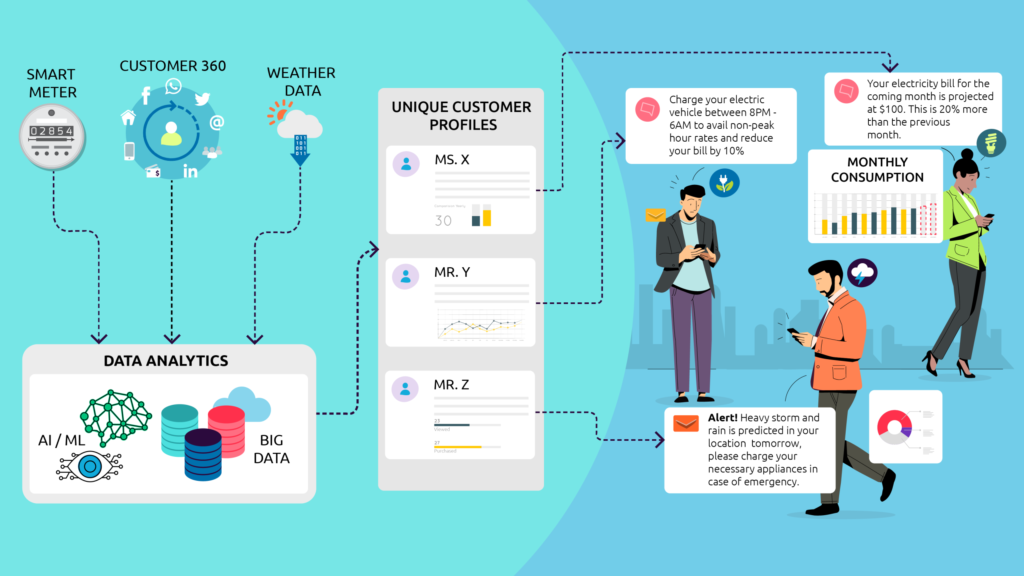
Today, customers expect way more. They’re looking for a sense that a brand actually knows them. Their preferences. Their behaviors. What they were looking at last Tuesday. What they purchased three months ago. And they want the brand to use that information to show them things they actually care about.
The old method took a huge CRM team and months of manual segmentation. The new way is to use AI to do it automatically, in real time, for thousands of customers at a time.
How AI Personalization Actually Works
AI personalization tools look at user behavior — what pages someone visited, how long they stayed, what they clicked, what they ignored, and what they bought. Then they leverage that data to predict what that person is going to want to see next and automatically deliver them the right content, product, or offer.
Platforms such as Klaviyo, HubSpot, Salesforce Einstein, and Dynamic Yield can do this at a more advanced level. Even smaller tools built into Shopify or Mailchimp now come with AI-level personalization built in.
Real-World Example: Email Campaigns
Let’s say you own an online skincare store. You have 10,000 email subscribers. Instead of blast-sending everyone the exact same email about your new moisturizer, an AI-driven email tool segments your list to look more like this:
- Subscribers who purchased dry skin products → moisturizer email with “finally, relief for dry skin” messaging
- Subscribers who purchased oily skin products → skip this email or send a variation promoting balance
- New subscribers who have not purchased yet → send an educational email about skin types with a gentle product mention
- Lapsed customers who haven’t opened emails in 90 days → send a re-engagement offer with a discount
Same campaign. Four different experiences. All automated. No team of five required.
The Numbers Behind Personalization
According to research, personalized emails lead to 6x higher transaction rates than standard ones. Personalized product recommendations contribute as much as 35% to Amazon’s overall revenue. And 80% of consumers say they are more likely to buy from brands that provide personalized experiences.
That’s not a small edge. That’s a competitive weapon.
What You Should Do Right Now
Begin by auditing your existing email and ad setup. Are you sending the same message to everyone? If so, that’s your best opportunity. Even basic segmentation — new vs. returning, buyers vs. browsers — can significantly lift your results. Then explore AI tools that can automatically take that segmentation a step further.
For more insights on digital marketing strategy and AI-driven growth, Media Progresif is a great resource worth bookmarking.
Trick #3 — AI-Powered Chatbots That Actually Close Sales

Chatbots Have a Bad Reputation — But That’s Changing
Mention chatbots to most people, and they roll their eyes. “Press 1 for billing. Press 2 for support.” That frustrating, robotic experience is what most people imagine. But modern AI chatbots are nothing like those. The gap between the old chatbots and the new ones is enormous.
New AI chatbots powered by large language models can hold real conversations. They can answer complicated questions, suggest products, handle objections, process returns, book appointments, and walk someone through an entire purchase — all without a human involved.
How AI Chatbots Are Changing the Game for Marketers
Marketing isn’t all about driving people to your website. It’s about converting them once they arrive. Almost all websites lose 97–98% of their visitors without a single interaction. A smart AI chatbot upends that ratio.
Here’s what a well-built AI chatbot can do on the marketing front:
Qualify leads instantly. Rather than waiting for a sales rep to follow up, the chatbot asks some smart questions and determines whether a visitor is a hot lead or just browsing. Hot leads get routed to a human immediately. Browsers get nurtured automatically.
Recover abandoned carts. Someone adds items to their cart and then leaves? The chatbot delivers a personalized message — on the website, via SMS, or through Messenger — with a gentle nudge and maybe a small discount.
Answer product questions 24/7. Your store is closed. Someone in a different time zone is on your site at 2am with a question. Rather than leaving in frustration, the chatbot responds immediately and closes the sale.
Upsell and cross-sell naturally. After a user adds a product, the chatbot can suggest related items: “Many customers who buy this also grab the matching case — want to take a look?”
AI Chatbot Performance vs. Traditional Live Chat
| Metric | Traditional Live Chat | AI Chatbot |
|---|---|---|
| Availability | Business hours only | 24/7/365 |
| Response time | Minutes to hours | Instant |
| Simultaneous conversations | 1–3 per agent | Unlimited |
| Monthly cost | $2,000–$10,000+ (staff) | $50–$500 (tool) |
| Lead qualification | Manual | Automated |
Tools to Check Out
For small to medium-sized businesses, tools such as Tidio, Drift, Intercom, and ManyChat offer excellent AI chatbot capabilities that don’t require a tech team to set up. Most integrate directly with Shopify, WordPress, or major CRMs.
One Important Warning
A chatbot is only as smart as the data you feed it. If you don’t train it well — teaching it your FAQs, product details, return policies, and brand voice — it will give vague or incorrect answers. Take the time to set it up correctly, and it becomes one of your hardest-working team members.
Trick #4 — Predictive Analytics: Know What Your Customers Want Before They Do
What Is Predictive Analytics and Why Should You Even Care?
Predictive analytics sounds technical. It’s actually a simple idea: using past data to predict future behavior. AI takes your historical customer data — purchases, clicks, time on site, seasonal patterns — and finds patterns that tell you what’s likely to happen next.
Which customers are about to churn? Which ones are ready to upgrade? What product should you push next month? When is the best time to send an email to a specific segment? Predictive analytics answers all of this, and it does it faster and more accurately than any human analyst ever could.
The Marketing Problems Predictive AI Solves
Problem 1: Wasted ad spend. Most brands throw money at ads and pray the targeting works. Predictive AI enables you to build lookalike audiences based on your highest-value customers — not just who bought, but who kept buying repeatedly, spent the most money, and even referred new customers. That precision targeting is what makes every ad dollar work harder.
Problem 2: Churn you never saw coming. Especially in subscription businesses, losing a customer silently is the silent killer. Predictive models can identify when customers are beginning to disengage — logging in less frequently, placing smaller orders, or waiting longer between purchases — so you can offer a retention promotion before they cancel.
Problem 3: Inventory and campaign timing. AI can analyze seasonal trends, social signals, and historical sales data to let you know when demand for a product is about to spike. You stock up before the rush. You time your promotion exactly right. You stop guessing.
Predictive Marketing in Action: A Simple Breakdown
Suppose you run a subscription coffee brand. Your predictive AI tool identifies a pattern: customers who don’t make a second purchase within 45 days of their first very rarely come back. So on day 30, it automatically kicks off a campaign — a personalized email with a “we noticed you haven’t reordered” message and a 15% discount.
The result? You save customers you didn’t even realize were abandoning you. No one had to stare at a spreadsheet and send follow-ups by hand. The system handled it.
Getting Started Without a Data Science Team
You don’t need a team of data scientists to use predictive analytics. Google Analytics 4 — which already comes equipped with built-in predictive metrics — along with Klaviyo’s predictive sending, Shopify’s analytics tools, and HubSpot’s AI features make this accessible to regular marketers.
Start small. Choose a single prediction to act on — something like “which customers haven’t bought in 60 days?” — and build an automated campaign around it. Once you see results, expand from there.
The Competitive Edge This Creates
Most of your competitors are still reacting. Something happens, they respond. A customer churns, they notice too late. A trend spikes, they scramble to keep up. Predictive AI allows you to be proactive. You see things coming. You act first. That timing advantage compounds over months and years into a serious business edge.
How These 4 Tricks Work Together
Here’s the little secret most marketers don’t know: these four hacks aren’t individual strategies. They are one complete system when used together.
AI-written content gets people to your site. AI personalization ensures they see content that is relevant to them. AI chatbots engage them in real time and convert them. Predictive analytics tells you who to contact, when to reach out, and what to say next.
Stack all four together, and you’ve built a marketing engine that gets smarter every single day — learning from every interaction, improving with every campaign, and surfacing opportunities faster than any exclusively human team ever could.
FAQs About AI Marketing Tricks
Q: Do I need a big budget to use AI marketing tools? Not at all. There are plenty of AI marketing tools with free plans or other low-cost starting points. Platforms like ChatGPT, Tidio, or some of the base Klaviyo plans are often free to start. You don’t have to be an enterprise with a massive budget to see real results.
Q: Will AI replace human marketers? No. AI does the tedious, data-heavy work — drafting, sorting, analyzing, automating. Human marketers are still required for strategy, creativity, relationship building, and brand voice. AI empowers marketers; it doesn’t put them out of a job.
Q: How do I know which AI tool is right for my business? Begin with your largest pain point. If content creation is devouring all your time, try out an AI writing tool. If email open rates are coming in low, give AI personalization a try. If you’re losing visitors without conversions, look into chatbots. Solve one problem at a time.
Q: Does Google penalize AI-generated content? Google says it cares about helpful, high-quality content — not who or what created it. Well-edited, accurate, original, and genuinely useful AI content can rank just as high as human-written content. The issue is low-effort, unreviewed AI content that doesn’t offer anything of substance. Edit and enrich everything.
Q: How long does it take to see results from AI marketing? Some results — such as faster content creation — are instant. Others, such as SEO improvements from better content or increases in conversion rates through chatbots, can require 30 to 90 days before you’ll see meaningful data. Stick with it.
Q: Are there privacy concerns with AI personalization? Yes, and they are serious things to think about. Ensure that whatever tool you are using is in compliance with GDPR, CCPA, or other privacy laws relevant to your marketplace. Use first-party data — the data your customers voluntarily gave you — instead of relying on third-party sources. Being transparent with your audience builds trust.
Wrapping It All Up
AI marketing is not a trend of the future. It’s a present-day advantage that thousands of smart brands are already using to grow faster, spend smarter, and engage more meaningfully with their audiences.
The 4 game-changing AI marketing tricks covered here — AI-assisted content creation, hyper-personalization, AI-powered chatbots, and predictive analytics — are not newfangled theoretical concepts. These are real strategies with real tools that you can begin exploring today.
You don’t have to be a tech expert. You don’t need a massive budget. You need a willing spirit to experiment, a deep knowledge of your customer, and the patience to build systems that get better over time.
Those who begin now will enjoy a significant head start by the time the rest of the market catches up. The only question is: which trick are you going to try first?