How we make media has changed forever.
Today, a lone creator can manufacture content that once took an entire studio full of employees to produce. Even small businesses can run video campaigns that used to cost tens of thousands of dollars. That shift was no accident. It happened because of AI.
AI media production strategies are no longer nice to have. They are the force driving hot, high-quality content in 2025. Whether you’re a YouTuber who has reached the limits of posting more or faster, a marketing team trying to break through social media noise, a podcaster producing too slowly for your fans, or a film student looking to improve the quality of your content — these strategies can help you work smarter and get better results by thinking about your story first — not just in quantity, but most importantly how to connect much deeper with viewers.
In this article we dissect 11 super strong AI media production strategies in simple terms. No fluff. No confusing tech jargon. Just crystal-clear, actionable ideas you can begin using today.
How AI Is Changing the Game in Media Production
Just a few years ago, AI in media meant auto-generated captions at best. Today, it’s generating scripts, editing footage, cloning voices, making visuals, and distributing content — all with little to no human input.
The numbers back this up. According to a 2024 PwC report, AI could add up to $15.7 trillion to the global GDP by 2030. Large amounts of that value are being generated in media and entertainment.
But here’s the rub — most creators are not fully leveraging AI. They experiment with one or two tools and leave the rest untried. The real power happens when you build out an end-to-end strategy around AI, not just use it as a shortcut.
Here are the 11 tactics that really work.
1. Build an AI-First Content Pipeline from the Ground Up
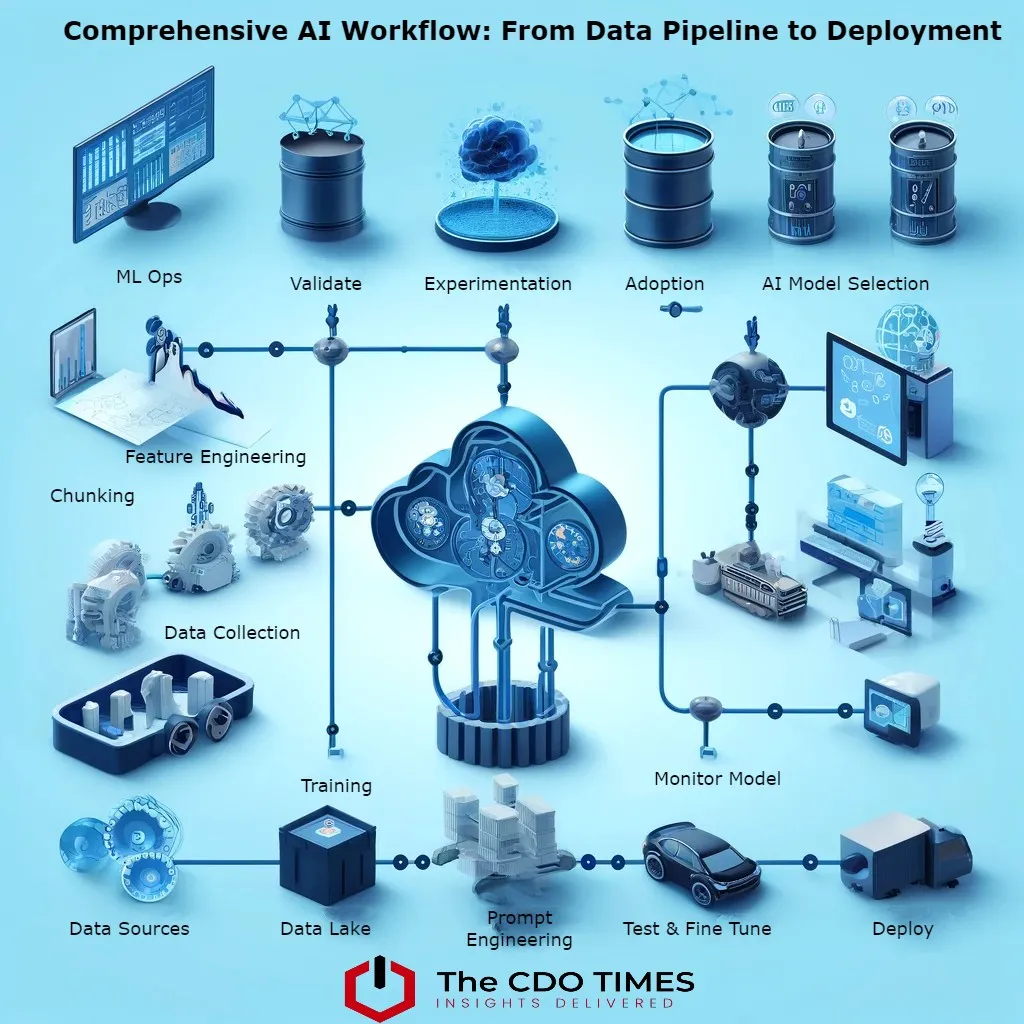
For most creators, AI is a bandage — something they slap on when they’re stuck. That’s the wrong approach.
The best AI media production approach begins before a single word is written or a camera is switched on. You build your entire content pipeline with AI baked in from the first step.
What This Means in Practice
Begin with an AI ideation tool. These tools can help you brainstorm topic clusters, hone in on trending angles, and map out a content calendar for the next 30 days within minutes.
Then move on through scripting, visual planning, and production — all supported by AI. When your pipeline is structured like this, you don’t spend time jumping between tools or rethinking your workflow in the middle of projects.
Imagine constructing a factory. Every station on the line has a role to play. AI fills those stations in a more optimal manner, so your human creativity can be concentrated on what matters most.
2. Save Time During Pre-Production with AI Script Writing
Writing a script from scratch takes time. A lot of it.
AI script writing tools have changed this dramatically. Platforms such as Runway, Sudowrite, and Claude can churn out a first-draft script for a YouTube clip, podcast episode, or short film in minutes.
Making the Most of AI Scripts
Don’t just copy what the AI hands you. Use it as a foundation. AI provides you with structure, key points, and natural flow. You bring in your voice, your stories, and your personality.
Here is an easy workflow that gets great results:
- Provide the AI with your subject, your target audience, and the tone you want
- Ask for a script with a hook, body, and call to action
- Revise the draft to include personal examples and eliminate robotic-sounding lines
- Pass your final draft through a readability application
This saves up to 60% of pre-production time without sacrificing quality.
3. Simplify Video Editing with AI Tools
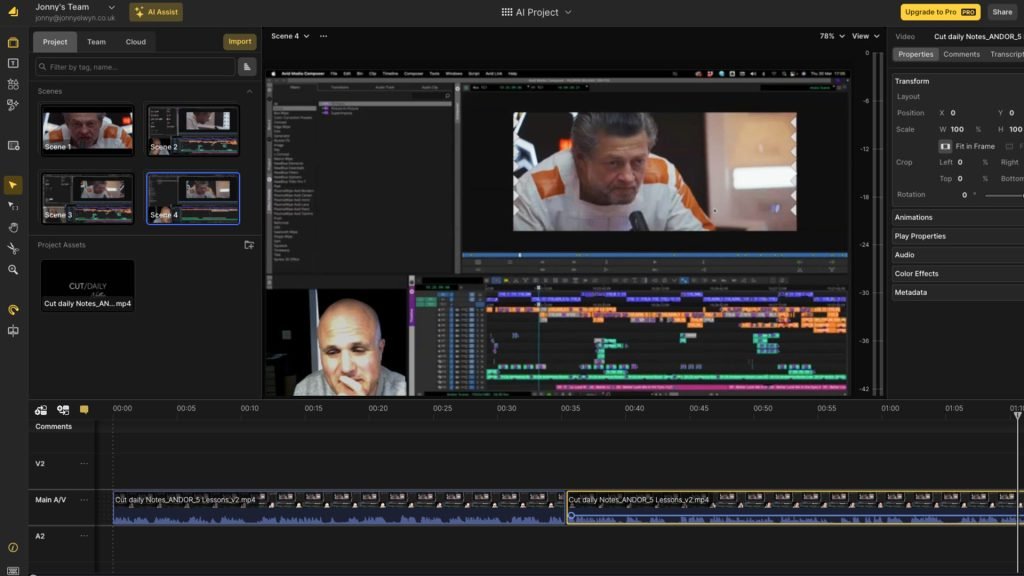
When it came to production schedules, video editing used to be the biggest time drain. Not anymore.
AI-driven video editors such as Descript, AI features in Premiere Pro, CapCut, and Opus Clip can now automatically cut out silences, remove filler words, add captions, and even suggest b-roll.
The Real-Time Advantage
Imagine uploading a raw interview and receiving a polished, cut-down version in less than 10 minutes. That’s not a dream. That is what apps like Descript and Opus Clip are doing today.
AI editing is a game-changer, for short-form content in particular. It allows you to turn one long-form video into multiple bite-sized clips for Instagram Reels, TikTok, and YouTube Shorts with almost zero additional effort.
| Task | Manual Time | AI-Assisted Time |
|---|---|---|
| Cutting silences | 45 min | 3 min |
| Adding captions | 30 min | 2 min |
| Making short clips from long footage | 2 hours | 15 min |
| Color correction | 1 hour | 10 min |
The time savings are real, and they accumulate over weeks and months.
4. Create Voiceovers and Audio Without a Recording Booth
Not everyone has the benefit of a professional microphone or a quiet room to record in. That was historically one of the biggest barriers to high-quality media production.
AI voice generation tools have now shattered that barrier completely.
Services such as ElevenLabs, Murf, and Play.ht can create natural-sounding voiceovers in dozens of languages and accents. You type your script, select a voice style, and download a studio-quality audio file in minutes.
When AI Voices Work Best
AI voiceovers shine in scenarios such as:
- Explainer videos and tutorials
- Product demos and ads
- E-learning courses
- Podcast intros and outros
- Foreign language translations of existing content
For creators who want to rely on their own voice but could use a backup, some tools even allow you to clone your own voice. This can be handy if you’re in a hurry and can’t do the recording yourself.
5. Produce Gorgeous Visuals Even Without a Design Team
Great visuals used to require a graphic designer, photographer, or visual effects artist. Now, AI image and video generation tools are making that power available to anyone.
Tools like Midjourney, DALL·E, Adobe Firefly, and Runway Gen-2 can generate original images, thumbnails, concept art, and even short video clips from a simple text description.
How to Make AI Visuals Work for Your Brand
The key is consistency. When you generate AI images, use consistent style prompts, color palettes, and aesthetic signals across all your content. This keeps your brand identifiable even when you’re using generated imagery.
For YouTube creators, proper use of AI-generated thumbnails has proven to increase click-through rates. Having the ability to test multiple thumbnail designs quickly — without hiring a designer for each one — is a genuine competitive edge.
6. Add a Special Touch with AI-Driven Content Personalization
One of the hardest things in media production is addressing a large audience without sounding generic. AI makes it possible to personalize content at a scale that was never achievable before.
What Personalization Actually Means Here
Personalization in AI media production doesn’t mean making a unique video for every single viewer. It means using AI to:
- Determine which subjects resonate with particular segments of your audience
- Create variations of the same content with different hooks and CTAs
- Customize email newsletters, social captions, and ad copy for various demographics
- Recommend content to viewers based on their past behavior
AI personalization is already being carried out behind the scenes by platforms such as HubSpot, Persado, and even YouTube’s own algorithm. As a creator, you can tap into these systems by building content around specific audience signals rather than broad topics.
7. Boost Distribution with AI-Powered Scheduling and Analytics
Creating great content is only half the battle. Getting it in front of the right people at the right time is the other half.
This is where AI-powered distribution tools come into play.
Tools That Handle the Heavy Lifting
Platforms such as Buffer, Sprout Social, and Lately rely on AI to study your past performance data and suggest the best times for posting. Some tools even automatically generate social captions from your long-form content.
On the analytics front, AI can tell you not just what performed well, but why. They identify patterns in viewer behavior, drop-off points in videos, and what type of content drives the highest engagement for your specific audience.
This feedback loop is powerful. You create content, AI parses it, and you feed those insights back into your next piece to make it even better.
8. Automate Content Repurposing Across Every Platform
Each long-form content asset you produce contains dozens of smaller pieces waiting to be discovered.
AI repurposing tools enable you to extract maximum value from every video, podcast, or blog post you create. If you want to stay on top of the latest tools and techniques for doing this effectively, Media Progresif is a great resource for keeping up with developments in modern media production.
The Repurposing Stack That Works
Here is a simple AI repurposing workflow:
- Record a long-form video or an extra-long podcast episode
- Use Descript or Otter.ai to transcribe it automatically
- Feed the transcript into an AI tool to extract top quotes, clips, and takeaways
- Use Opus Clip or Vidyo.ai to pull the best short clips automatically
- Schedule those clips for Instagram, TikTok, LinkedIn, and YouTube Shorts
One piece of content becomes 10 to 15 assets with minimal effort. This is one of the most practical AI media production strategies for small teams and solo creators.
9. Reach New Audiences with AI Translation and Localization
The global audience is huge. And most creators communicate with only one corner of it.
AI-powered translation and dubbing tools are starting to change that.
Extending Your Reach Without Extra Production Costs
Tools like HeyGen, Rask.ai, and Papercup can convert your video content into dozens of languages — including lip-synced dubbing — at a fraction of the cost and time of traditional localization.
This means a YouTube creator in the United States can now have versions of their content that visually and sonically appear as if they were made locally for Spanish, Portuguese, Hindi, or French-speaking audiences. That potential reach increases dramatically without dramatically increasing the budget.
This is a big opportunity for brands. Region-specific content consistently outperforms generic global content in both engagement and conversion rates.
10. Secure Your Content with AI Moderation and Rights Management
This one doesn’t get talked about enough.
As AI tools make it easier to produce content, they also make it easier for others to steal, repurpose, or misuse that content. AI-led content protection tools help you stay ahead of that problem.
What AI Moderation Covers
On the moderation side, platforms like YouTube and Facebook already deploy AI to flag content that breaks community guidelines before it reaches an audience. As a creator, you can use similar AI tools to pre-check your content and prevent accidental policy violations before you upload.
On the rights management side, services like Pixsy and Copytrack use AI to scour the internet for unauthorized uses of your images or videos. When they find a violation, they notify you and can even automate the takedown or licensing process.
Protecting your work is just as important as creating it. AI makes protection scalable.
11. Keep Humanity at the Heart of Every AI-Powered Strategy
This is the tactic that ties all the others together.
AI is a tool. A powerful one. But the greatest media in the world still springs from human thought, human feeling, and human storytelling. The creators winning in 2025 are not the ones who have replaced themselves with AI. They are the ones who have used AI to magnify what is essentially human about them.
The Right Balance Between AI and Human Creativity
Use AI to manage the monotonous, time-intensive parts of production. Use your human judgment for:
- Storytelling and narrative structure
- Ethical decision-making about your content
- Fostering authentic relationships with your audience
- Infusing your work with personal experience and truth
When you strike this balance, AI stops competing with your creativity. It multiplies it.
A Quick Look at All 11 Strategies
| Strategy | Primary Benefit | Best Tool Examples |
|---|---|---|
| AI-first content pipeline | Saves time at every stage | Claude, Jasper, Notion AI |
| AI script writing | Faster pre-production | ChatGPT, Sudowrite |
| Automated video editing | Dramatically reduces edit time | Descript, Opus Clip |
| AI voiceovers | Removes audio barriers | ElevenLabs, Murf |
| AI visual creation | No design team needed | Midjourney, Adobe Firefly |
| Content personalization | Higher audience engagement | HubSpot, Persado |
| AI distribution and analytics | Smarter posting strategy | Buffer, Sprout Social |
| Content repurposing | More output with less effort | Vidyo.ai, Otter.ai |
| Translation and localization | Global reach on a small budget | HeyGen, Rask.ai |
| Content protection | Safeguard your work | Pixsy, Copytrack |
| Human-centered AI use | Authenticity and quality | Your own judgment |
FAQs About AI Media Production Strategies
Q: Is it necessary to have technical know-how to operate AI media production tools? The majority of AI production tools are designed for non-technical users. Apps including Descript, ElevenLabs, and Midjourney offer straightforward interfaces where you type what you want and AI does the rest. You don’t have to know how to code.
Q: Are AI media production strategies only for big brands and companies? Not at all. Most of the top AI tools are accessible at a minimal cost or even free at the entry level. Solo creators and small teams often benefit the most because AI allows them to compete with large productions on a fraction of the budget.
Q: Will AI replace the need for human media makers? No. AI takes over repetitive tasks, not creative thinking. The most successful creators in 2025 use AI as a collaborator, not a replacement. Human storytelling, emotion, and judgment remain irreplaceable.
Q: How do I select the right AI tools for my production workflow? Begin by determining where you waste the most time in your current workflow. If it’s editing, start with an AI editor. If it’s writing scripts, try an AI writing assistant. Build your toolkit one tool at a time rather than trying to take it all on at once.
Q: Do platforms like YouTube and Instagram allow AI-generated content? Yes, though platforms may at times require disclosure. YouTube, for instance, requires creators to flag when content was made by AI and appears similar to real footage. Always review the current content policies of all platforms where you post.
Q: In what ways do AI media production strategies improve SEO? AI helps you create more content, more consistently, with better keyword targeting. Tools can also help you refine titles, descriptions, and tags to accommodate search intent — all of which contribute to better organic visibility.
The Bigger Picture: What These Strategies Add Up To
When you survey all 11 of these AI media production strategies together, a clear picture comes into focus.
AI is not just a shortcut. It’s a complete makeover of the infrastructure we use to make, distribute, and protect modern media. Creators who incorporate these strategies into their workflows are not only saving time — they’re making better work, reaching more people, and building more durable businesses.
The gap between those who strategically use AI and those who don’t is growing every month. The good news is that there has never been an easier or more affordable time to get started.
Choose just one tactic from this list. Implement it this week. Then add another. Within a few months you will have a production system that would have seemed impossible just a few years back.
The future of media is already here. The only question is whether you’re building with it — or falling behind without it.