You’ve seen those ads that freeze you in your virtual tracks. The ones that make you feel like they’re fitted just for you. Guess what? They likely were — because of AI.
Artificial intelligence has radically transformed advertising. Big brands are employing it to write better copy, find the right people and spend less money for more results. But here’s the problem: just how deep this rabbit hole goes is frankly lost on most small business owners and marketers.
In this blog, we reveal 5 dark AI ad secrets that are making millions — and no one is talking about them. No fluff. No complicated tech talk. Only real tactics you can begin employing right away.
So whether you’re running Facebook ads, Google campaigns or even TikTok promos — these secrets work for everyone.
Secret #1: AI Isn’t Just Writing Ads — It’s Testing Thousands of Them at Once
The Old Way of Ad Testing Was Slow and Expensive
Pre-AI, marketers had to choose one or two versions of ads, run them for a few weeks and see if anything happened. This was called A/B testing. It was slow, expensive and restrictive.
You would spend hundreds — sometimes thousands — of dollars just to learn which headline people liked best.
How AI Transformed the Game of Testing Forever
Now AI tools can create and test hundreds of ad variations simultaneously. Different headlines. Different images. Different calls to action. Different tones.
The AI watches in real time. It notes which version attracts more clicks. Which one gets more sales. Then it automatically reallocates your budget to the winner.
It’s called multivariate testing, and it’s one place where AI can act faster than any human team ever could.
Real-World Example
A fashion brand running ads on Facebook may test:
- 10 different headlines
- 5 different images
- 4 different button texts
- 3 different audience segments
That’s 600 possible combinations. AI can operate all of them, identify the highest performer and optimize your spend — within 48 hours.
| Testing Method | Variations Tested | Time to Results | Cost Effective |
|---|---|---|---|
| Traditional A/B Testing | 2–4 | 2–4 weeks | Low |
| Manual Multivariate | 10–20 | 1–2 weeks | Medium |
| AI-Powered Testing | 100–1000+ | 24–72 hours | Very High |
This is a large part of why AI ad campaigns outperform manual ones. It’s not magic. It’s math — and it’s done very, very fast.
What You Can Do Right Now
Platforms such as Meta Advantage+, Google Performance Max, and AdCreative.ai are already outfitted with this sort of AI. For anyone who isn’t using them, you’re truly leaving money on the table.
Never let your dynamic creative opportunities go to waste. Allow the AI to swap your assets. Trust the data, not your gut.
Secret #2: AI Knows How Your Customer Feels — And It Takes Advantage of It
People Buy on Emotion, Not Logic
Most everyone believes their purchases are the result of wise, rational decisions. Research says otherwise. Emotions are found to be the key motivator behind most purchasing decisions. Reason only shows up afterward to justify what we already desired.
The most successful ads don’t sell a product. They sell feelings.
We’ve now reached the point at which AI tools are so good at determining what emotions will work on your target audience — and then writing ads that hit those exact emotional buttons.
How Sentiment Analysis Is Used in Advertising
AI can read through thousands of customer reviews, social media comments, forum posts and search queries. It discerns patterns in people’s use of language.
Are your customers frustrated? Excited? Hopeful? Insecure? Curious?
When AI knows this, it can create ad copy that targets those emotions directly. Not in a creepy, manipulative way — in the sense that people really feel understood.
The Emotional Triggers AI Most Frequently Targets
Here are the emotional drivers most commonly targeted by AI in ad copy:
FOMO (Fear of Missing Out): “Only 3 left in stock!”
Hope and Aspiration: “Imagine waking up with clear skin every morning.”
Belonging: “Join 50,000 people who have already made the switch.”
Trust and Safety: “10,000 five-star reviews strong.”
Curiosity: “This is one almost everyone gets wrong.”
AI technologies such as Persado and Phrasee are dedicated exclusively to emotional language optimization. They experiment with various emotional tones and predict which one will resonate most effectively with your exact audience.
Why This Secret Is So Powerful
Your competitors may be sharing the same product photos and a similar price. But if your ad copy touches an emotional nerve and their ad copy doesn’t — you win.
That’s the difference between an ad that gets scrolled past and one that gets clicked, saved and shared.
For more in-depth breakdowns of digital marketing strategies like this, check out Media Progresif — a great resource for marketers who want to stay ahead of the curve.
Secret #3: Hyper-Personalization at Scale — The AI Superpower
Personalization Was Once a Luxury
Not long ago, only giant corporations with enormous budgets had access to tailored advertising. Custom creatives for various audience segments took large creative teams and even bigger budgets.
Not anymore.
What Hyper-Personalization Actually Means
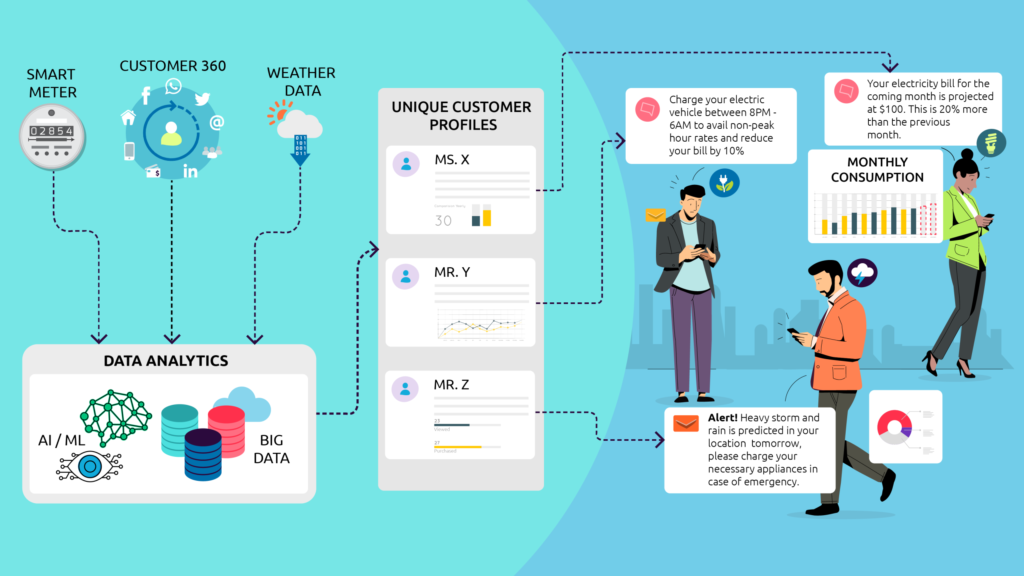
Hyper-personalization is the idea of showing different ads to different people, depending on who they are, what they’ve done and what they probably want next.
Not “men vs. women” or “young vs. old.” We’re talking about:
- A person who saw your pricing page but didn’t make a purchase → receives an ad with a promotion available for a short time
- A past customer → sees an ad for a similar product to what they already bought
- Anyone who viewed 80% of your video → sees an ad with a testimonial
- A person in a cold northern city in January → sees an ad for warm products with weather-based copy
AI does all this work in real time, automatically, without you needing to create hundreds of different campaigns.
Dynamic Creative Optimization (DCO)
That’s the technical term for what AI is doing here. Dynamic Creative Optimization means the AI does all the work of putting together whatever combination of headline, image, body copy and CTA is working in that moment for each viewer.
Think of it like a restaurant menu. All the kitchen ingredients are there. But every customer gets a meal designed specifically for what that person likes.
| Audience Segment | What AI Shows Them |
|---|---|
| First-time visitor | Brand awareness ad with social proof |
| Product page visitor | Retargeting ad with product details + discount |
| Cart abandoner | Urgency-based ad: “Still thinking it over?” |
| Previous buyer | Cross-sell ad: “You’ll love this too” |
| Lapsed customer | Win-back ad with special offer |
Tools That Make This Possible
Google’s Performance Max campaigns automatically do this over Search, YouTube, Display, Gmail and Maps.
Meta Advantage+ accomplishes this over Facebook and Instagram.
Smartly.io and Celtra both enable brands to create dynamic creative templates at scale.
Fortunately, you don’t need to be a tech whiz to operate these. You simply need to feed the AI good inputs — strong images, copy variations and a clear goal.
Secret #4: AI Can Predict Who’s Going to Buy Before They Even Know It Themselves
Lookalike Audiences Were Only the First Step
You may have heard of lookalike audiences — where platforms like Facebook find people who are similar to your current customers. It was a big leap forward when it launched.
But AI has ventured much farther than that.
Predictive Behavioral Targeting
AI now is not just determining who your customers are. It studies what they’re doing at this moment — and projects what they’re going to do next.
That is known as predictive behavioral targeting. And it is also one of the most potent weapons in digital advertising today.
Here’s how it works:
The AI monitors patterns across millions of users. It knows that users who search for “best running shoes” on Monday, watch fitness videos on Tuesday and visit a nutrition blog on Wednesday — are the same people most likely to buy workout gear by the weekend.
So your ad meets them on Thursday. Long before your competitors even realize they are a possible customer.
The Data Points AI Uses
AI-powered ad platforms process hundreds of signals at a time:
- Search history
- Purchase history
- App usage patterns
- Time spent on specific content
- Location data
- Device type and usage time
- Social media engagement patterns
None of this is about invading privacy — those systems use anonymized, aggregated data according to platform guidelines. The power of prediction remains awfully impressive, however.
Why This Is a Huge Advantage for You
The majority of advertisers want to reach people who are already shopping. They are vying for the same hot leads.
Predictive targeting helps you get to people right before they enter buying mode. Your brand is already in their heads when they decide.
That’s like getting a peek at what someone wants for dinner before they even get hungry.
Platforms Leading in Predictive AI
- Google Smart Bidding updates bids in real time according to the estimated probability of conversion
- The Trade Desk employs AI-powered predictive targeting on the open web
- Meta’s Advantage+ Audience broadens targeting with conversion predictions
According to Think with Google, advertisers using AI-powered bidding strategies see significantly stronger ROI compared to manual bidding — making predictive AI one of the highest-leverage tools available to modern marketers.
Secret #5: AI-Generated Ad Creative Now Looks Uncannily Human
The Creative Barrier Is Gone
It used to be said: “AI can do data, but humans can be creative.” That argument is officially over.
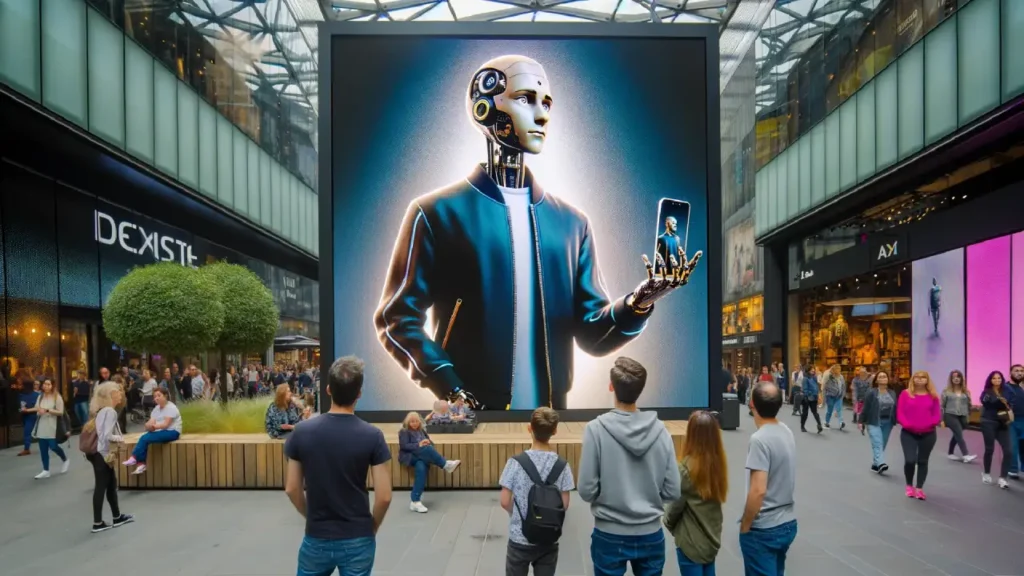
AI tools can now create great ad images, videos, voiceovers and copywriting that performs just as well — sometimes better — than work produced by seasoned creative teams.
This levels the playing field all around. Now a solo entrepreneur can develop ad creative as good as that of big-budget brand campaigns.
What AI Can Create for Your Ads Right Now
Images and visuals: Platforms such as Adobe Firefly, Midjourney and DALL-E are able to create custom product pictures, lifestyle images and banner graphics from simple text prompts.
Ad copy: Tools like Copy.ai, Jasper and ChatGPT generate headlines, body copy and CTAs in your brand voice to suit any audience.
Video ads: Synthesia, Runway and HeyGen will produce video ads with AI avatars, voiceovers and animation templates — no camera crew required.
Voiceovers: ElevenLabs and Murf.ai can produce realistic voiceovers in dozens of languages and tones.
The Secret Within the Secret
Here’s what most people are missing: The true power isn’t simply that AI can generate content. It’s that AI can generate content, test it, learn from the results and get better — all in a continuous loop.
You put 20 AI-generated ad variations out in the wild. The AI sees which ones work. It remixes new versions inspired by the winning editions. You launch those. The cycle repeats.
The more data you have, the better and more efficient your ads become over time. It is called a creative feedback loop, and it’s how some brands are consistently smashing their competition in metrics.
AI Creative: Getting Started Today
It’s not as though you have to do a cannonball into the deep end of the pool. Start small:
- Generate 5 unique headline ideas for your next ad using an AI tool
- Let the platform test which one works best
- Take the winner and turn it into a prompt for more variations
- Rinse and repeat every campaign cycle
Just doing this much will get you a dramatic difference in your results in about two weeks.
How These 5 Secrets Work in Tandem
This is the magic of AI advertising: These five secrets don’t operate independently of one another. They pile on top of each other.
AI evaluates thousands of versions → discovers the best creative Emotional AI → makes that creative hit harder Hyper-personalization → serves the right version to the right person Predictive targeting → hits them exactly when they are ready AI-generated creative → creates more content for the cycle to consume
Put them together, and you have an ad system that becomes even smarter, cheaper and more effective over time. On autopilot.
And that is why brands employing AI in their advertising are far outpacing those doing it manually.
Mistakes People Make With AI Ads
But powerful tools can also be traps.
Mistake 1: Having too much confidence in AI systems and not checking their outputs. AI can make mistakes. Always review creative before publishing. Look for typos, misspellings or facts that are off.
Mistake 2: Using AI as a substitute for strategy. AI is a tool. It executes strategy — it doesn’t invent it. You still need to have a clear audience, offer and goal.
Mistake 3: Feeding AI bad inputs. Bad prompts produce bad output. The more precisely and fully you specify your instructions, the better AI does.
Mistake 4: Failing to pay attention to the data AI sends you. AI produces a ton of performance data. Many marketers ignore it. The value buried in that data is often worth far more than the ads themselves.
Mistake 5: Setting and forgetting. AI optimizes in real time, but you should still check in regularly. Markets shift. Audiences shift. Offers expire. Stay involved.
FAQs About AI Ad Secrets
Q: Do I have to be on a big budget to use AI advertising tools? No. AI advertising tools are often offered with free tiers or at cost-effective rates. Facebook and Google have their AI offerings integrated directly into their ad platforms at no extra charge. You can begin with as little as $5–$10 per day.
Q: Will AI replace human marketers? Not entirely. AI operates data, testing and production at scale. But human judgment, brand strategy and creative direction still matter a lot. The best outcomes result from humans and machines collaborating.
Q: Are ads made by AI less authentic? Not necessarily. When conditioned with your brand voice and informed by actual customer insights, AI-generated ads can have a very natural, authentic feel. The secret is good input and human oversight.
Q: What’s the best AI ad tool for beginners? For novices, try Meta Advantage+ or Google Performance Max — they are embedded in platforms you likely already use and do most of the AI optimization for you automatically.
Q: Is predictive targeting legal and ethical? Yes, according to platform rules. Major platforms comply with GDPR and CCPA. The targeting is built on anonymized behavior, not personally identifiable information.
Q: How long does it take to see ROI from AI ad optimization? The vast majority of AI systems require 7–14 days to establish sufficient data for meaningful optimization. After that, you can expect steady and consistent improvement.
Q: Can AI help with ad targeting at the local level? Absolutely. AI can narrow targeting by city, neighborhood, weather or local happenings. This can be particularly powerful for brick-and-mortar businesses.
Wrapping It All Up
The advertising world has changed. And it’s changed fast.
The brands that are winning today aren’t necessarily those with the biggest budgets. They’re the ones using AI intelligently — testing faster, personalizing deeper, targeting sharper and making more content without burning out.
These 5 powerful AI ad secrets are no longer the exclusive property of Fortune 500 companies. The tools are accessible. The platforms are ready. All that’s needed now is for you to decide to use them.
Start with one secret. Master it. Then layer in the next.
Because while your competitors are still guessing, you will already be optimizing.